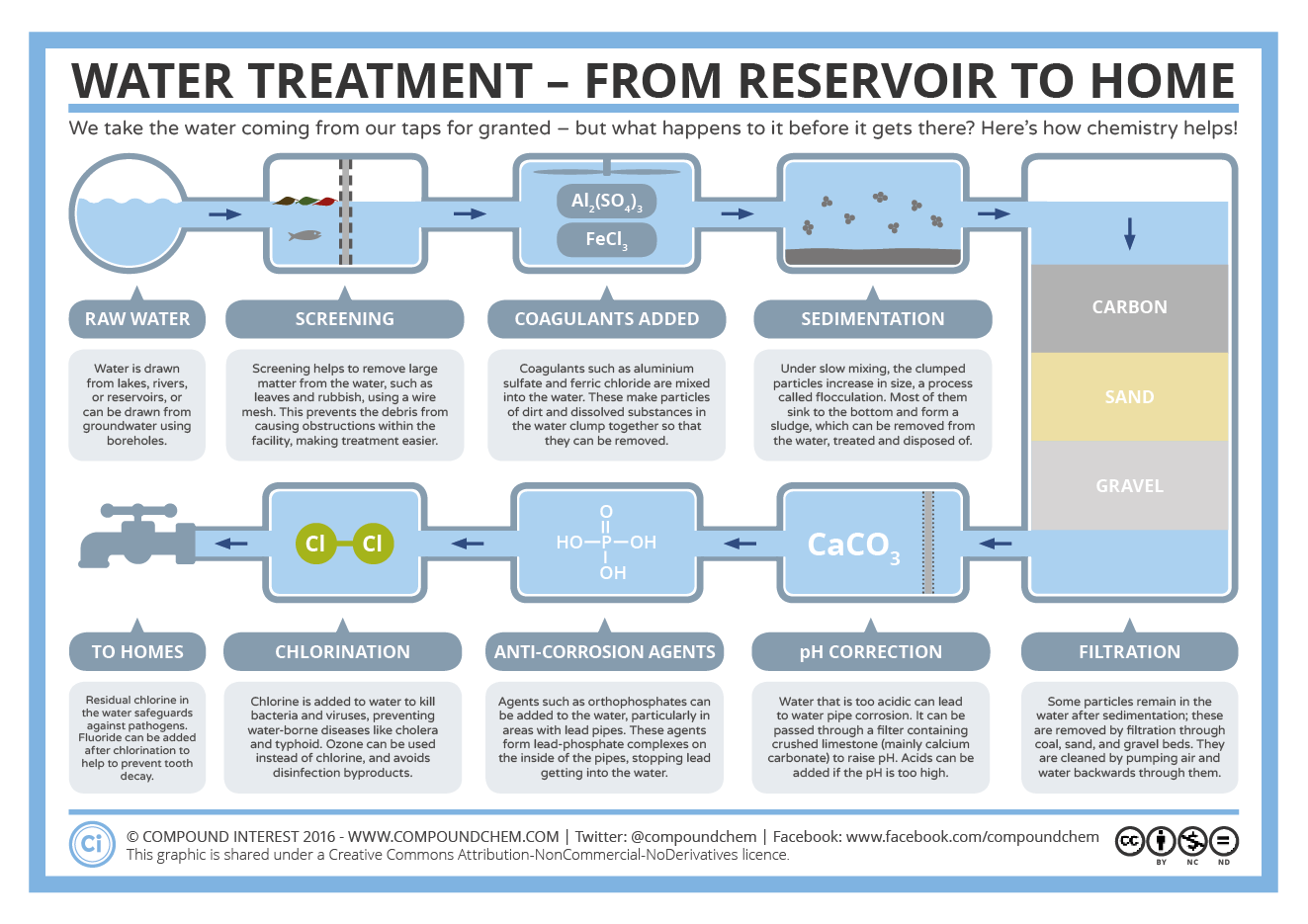
We take for granted the water that comes
out of the taps in our home when we turn them on – but a lot of work
goes into getting it there. Chemistry, too, has a hand in making sure
that the water is safe to drink. Here, we take a look at the water
treatment process, and in particular the chemicals used to get clean
drinking water to your tap.
The water that ends up in our homes can begin in a number of places. Much of it is groundwater – water beneath the Earth’s surface, trapped between the pores and cracks in rocks. This water can actually be relatively pure, due to natural filtration through chalk and similar rock types, and as such can sometimes skip through some of the treatment steps we’ll detail here, as it contains little by way of debris and organic material.
The water that ends up in our homes can begin in a number of places. Much of it is groundwater – water beneath the Earth’s surface, trapped between the pores and cracks in rocks. This water can actually be relatively pure, due to natural filtration through chalk and similar rock types, and as such can sometimes skip through some of the treatment steps we’ll detail here, as it contains little by way of debris and organic material.

