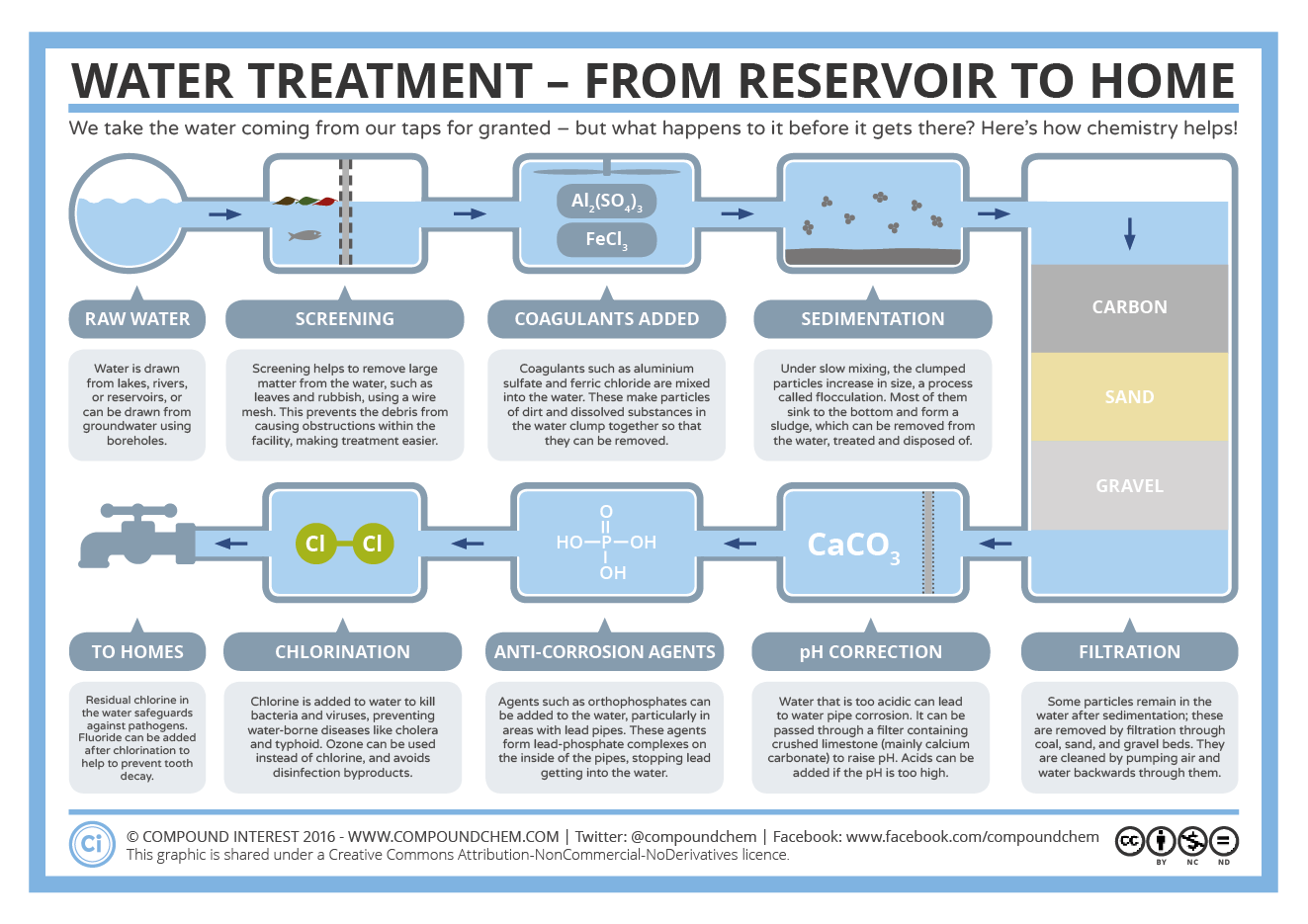
We take for granted the water that comes
out of the taps in our home when we turn them on – but a lot of work
goes into getting it there. Chemistry, too, has a hand in making sure
that the water is safe to drink. Here, we take a look at the water
treatment process, and in particular the chemicals used to get clean
drinking water to your tap.
The water that ends up in our homes can begin in a number of places. Much of it is groundwater – water beneath the Earth’s surface, trapped between the pores and cracks in rocks. This water can actually be relatively pure, due to natural filtration through chalk and similar rock types, and as such can sometimes skip through some of the treatment steps we’ll detail here, as it contains little by way of debris and organic material.
Water from reservoirs or rivers, on the other hand, will need these to be removed before further chemical treatment can begin. The very first step in this case is removing the larger debris from the water. This is a simple mechanical process, by which the water is passed through a grille which traps this debris. Removing it first prevents it from causing blockages in the treatment works later in the process.
Screening may remove larger bits of waste from the water, but it doesn’t help remove smaller pieces, or dissolved substances in the water. This is where chemistry makes its first appearance. In order to remove organic matter, chemicals referred to as coagulants are added – commonly aluminium sulfate or iron (II) chloride. Coagulants work because they help neutralise the negative charge on the small particles of organic matter in the water, stopping them from repelling each other and allowing them to clump together. Flocculation is the name given to the mixing process that increases the size of the clumped particles, forming what’s known as a floc.
The water that ends up in our homes can begin in a number of places. Much of it is groundwater – water beneath the Earth’s surface, trapped between the pores and cracks in rocks. This water can actually be relatively pure, due to natural filtration through chalk and similar rock types, and as such can sometimes skip through some of the treatment steps we’ll detail here, as it contains little by way of debris and organic material.
Water from reservoirs or rivers, on the other hand, will need these to be removed before further chemical treatment can begin. The very first step in this case is removing the larger debris from the water. This is a simple mechanical process, by which the water is passed through a grille which traps this debris. Removing it first prevents it from causing blockages in the treatment works later in the process.
Screening may remove larger bits of waste from the water, but it doesn’t help remove smaller pieces, or dissolved substances in the water. This is where chemistry makes its first appearance. In order to remove organic matter, chemicals referred to as coagulants are added – commonly aluminium sulfate or iron (II) chloride. Coagulants work because they help neutralise the negative charge on the small particles of organic matter in the water, stopping them from repelling each other and allowing them to clump together. Flocculation is the name given to the mixing process that increases the size of the clumped particles, forming what’s known as a floc.
The sludge formed by the coagulation and flocculation processes is allowed to settle in the subsequent stage, so that it can be removed from the water, treated, and disposed of. This sludge is partly in the form of metal hydroxides, formed during the coagulation process, as well as the organic materials removed. Some of its potential uses include being added to fields on which crops will be grown. Failing this, it must be sent to landfill or incinerated to dispose of it.
This article was originally published by Compound Interest. For read the full version of this article, please visit Compound Interest/Water-Treatment.

Tidak ada komentar:
Posting Komentar